
If you’re facing dental implant surgery, you’ve probably spent hours researching everything from success rates to recovery times. But here’s something you might not have considered: the shape of the drill your surgeon uses could make a bigger difference than you think. Enter the scallop-shaped drill — the dental world’s answer to precision engineering.
What Makes Scallop-Shaped Drills Different?
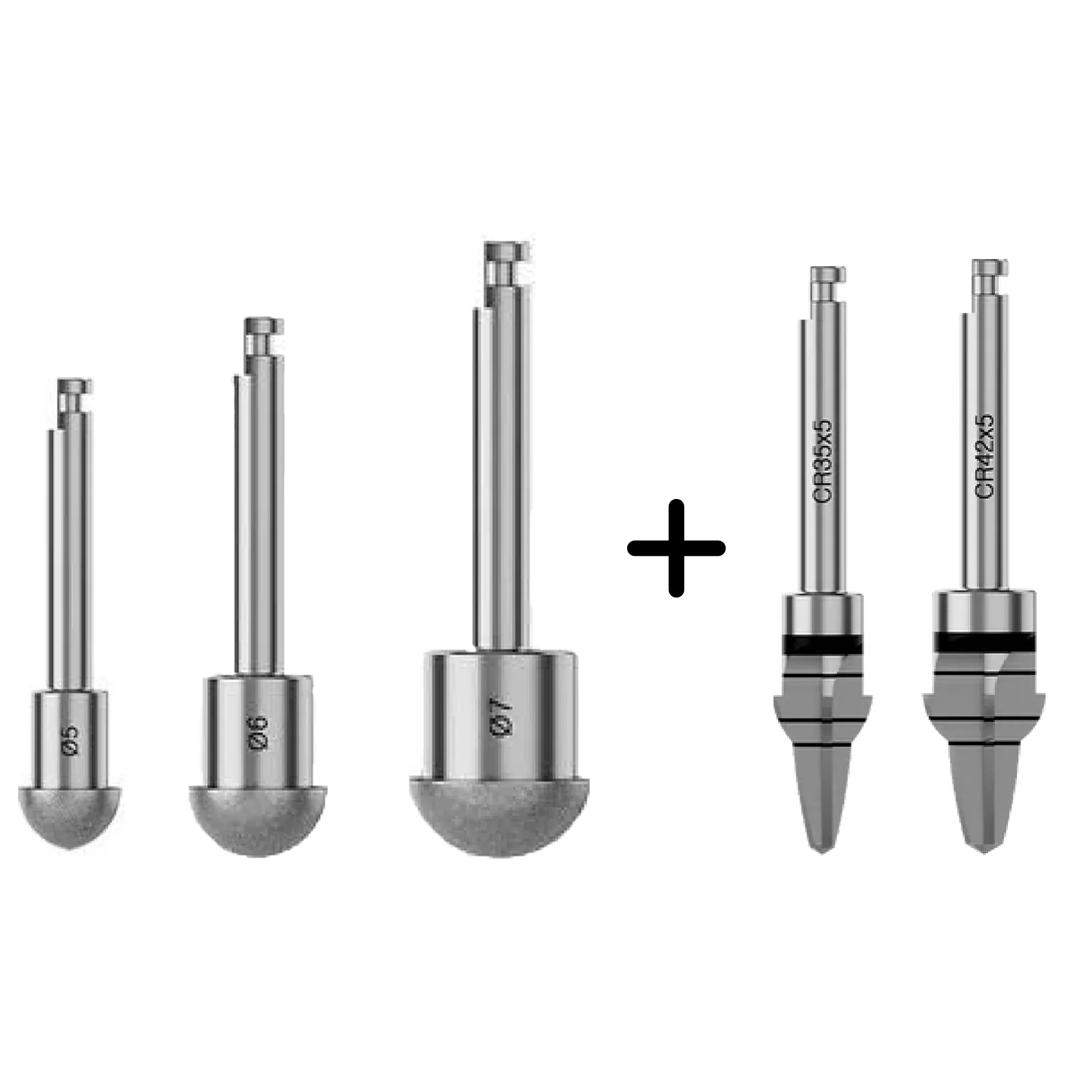
Picture a traditional drill bit: a straight, spiraled cylinder that bores through bone like a construction tool cutting through concrete. Now imagine something more elegant — a drill with gentle, curved edges resembling a scallop shell. These aren’t just aesthetically pleasing; they’re designed with your jawbone’s biology in mind.
The scalloped edges of scallop shaped drills create a unique cutting pattern that’s fundamentally different from conventional drills. Instead of aggressive, straight-line cutting, they offer a controlled, tissue-friendly approach that supports the delicate balance your bone needs to heal properly.The Science Behind Better Outcomes
Heat Generation: Less Fire, More Finesse
Traditional drills can generate excessive heat. When drilling into living bone, high temperatures are like kryptonite to the cells trying to integrate with your new implant. Bone cells begin dying at around 47°C (117°F), leaving little room for error.
Scallop-shaped drills address this through superior irrigation and heat distribution. Their curved channels allow cooling fluids to flow more effectively, keeping temperatures in the safe zone. Think of it like the difference between a basic fan and a well-designed air conditioning system — both move air, but one does it far more efficiently.
Bone Preservation: Cutting Smart, Not Hard
Your jawbone isn’t just solid calcium; it’s living tissue with blood vessels, cells, and a complex structure that must remain intact for successful implant integration. Scallop-shaped drills create what surgeons call “condensed bone walls” rather than simply removing bone tissue. This means the drill compresses and strengthens the bone around the implant site while creating the necessary space. It’s like carefully removing bricks and reinforcing a wall, rather than smashing through it with a sledgehammer.
Real-World Impact on Your Surgery Experience
Faster Healing Times
Clinical observations suggest that patients treated with scallop-shaped drills often experience shorter healing periods. While results vary (every mouth is unique), improved bone preservation typically leads to better initial stability and faster osseointegration — the process where your bone grows into the implant surface.
Reduced Post-Surgery Discomfort
No one promises pain-free dental surgery (let’s be realistic), but the gentler drilling action often results in less tissue trauma. Less trauma generally means reduced swelling, bruising, and fewer days of looking like you went ten rounds with a heavyweight boxer.
Better Long-Term Success Rates
Implants placed with advanced drilling techniques, including scalloped designs, show improved long-term stability. The preserved bone structure provides a stronger foundation, which is crucial for implants designed to last decades.
Technical Advantages Explained
Improved Irrigation Flow
The scalloped design creates natural channels for saline irrigation during drilling. Better irrigation ensures superior temperature control, reduced bacterial contamination, and cleaner surgical sites. It’s like washing dishes under a gentle stream versus blasting them with a fire hose — more control, better results.
Reduced Vibration and Chatter
Traditional drills can create vibrations that travel through your jawbone, potentially causing micro-fractures or unnecessary trauma to surrounding tissues. The scalloped geometry minimizes these vibrations, enabling smoother, more controlled cutting.
What Dental Professionals Are Saying
Oral surgeons are increasingly adopting advanced drill designs, particularly for challenging cases involving dense bone or limited space. Many agree that, despite a learning curve, the improved outcomes justify the investment in new techniques and equipment.
However, the surgeon’s expertise matters more than the tools alone. A skilled surgeon using traditional equipment will likely achieve better results than an inexperienced one with the latest drills.
Frequently Asked Questions
Q: Are scallop-shaped drills used for all dental implants?
A: Not necessarily. Your surgeon will choose the best drilling technique based on your bone density, implant location, and individual needs.
Q: Do procedures with scallop-shaped drills take longer?
A: The drilling phase may take slightly longer due to the controlled approach, but this often leads to faster overall healing times.
Q: Are there risks with this newer technology?
A: As with any surgical tool, proper training is essential. In experienced hands, these drills typically offer an improved safety profile.
Q: Will my insurance cover procedures using advanced drilling techniques?
A: Most insurance policies cover the implant procedure itself, not specific tools, but check with your provider for clarity.
Q: How can I tell if my surgeon uses advanced drilling techniques?
A: Ask during your consultation. Most surgeons are happy to discuss their techniques and equipment.
Looking Forward: What’s Still Evolving
The dental implant field is advancing rapidly, and we’re likely only scratching the surface of what’s possible. Computer-guided surgery combined with advanced drilling techniques is becoming more common, offering even greater precision.
Ongoing research into drill surface coatings and materials could further improve outcomes. Some experimental designs incorporate antimicrobial properties or enhanced heat dissipation. However, the ideal drilling parameters for different bone types and patient populations remain an active area of study.
The bottom line? Scallop-shaped drills represent a significant advancement in implant surgery, part of a broader trend toward precise, biology-friendly techniques. As these tools become more refined and widely adopted, patients can expect continued improvements in surgical experiences and long-term outcomes.



Write a comment ...